Showing posts with label Quality management. Show all posts

Thursday, 10 December 2015

Poster of the Month, December 2015: The importance of quality in the workplace


Quality is a
foundation
— not just a
finishing touch


December
's Poster of the Month shows how quality is not just about dressing things up to look good. It is a principal that needs to be applied to every aspect of your business — from the ground up.


Quality makes a solid foundation on which to build everything else.

Presentation is only one thing to think about, you also need to consider your:
  • Service — attitude and manner when dealing with customers
  • Flexibility going the extra mile to respond to customers' needs
  • Reliability — being dependable and doing what you promise to do
  • Delivery — delivering on time, with pride, care and attention to detail
  • Corrective action — responding appropriately if things go wrong 

Your employees are instrumental in delivering quality.

You can help your employees to help your customers by establishing a nurturing culture that respects, encourages and involves them.

Here are just some of the ways your company culture can support your employees:

  • Provide adequate training and support
  • Allow them autonomy to do their job without being micromanaged or constantly having to seek approval/authorisation/guidance from a superior
  • Motivate staff to succeed and achieve high standards
  • Celebrate and reward success 
  • Listen and respond to employees' ideas and concerns
A culture like this makes employees more invested in what they are doing and more likely to do it well.

The result?

Well let's just say if your company was a stick of seaside rock, it would read QUALITY right through the middle!


If you like what you have read here today and would like to implement some of these principles in your company or organisation, Kodiak's workplace poster programme could help you do just that.

To find out more, please give us a call on: 01530 456 000

Monday, 6 July 2015

Poster of the Month, July 2015: Valuing your employees


We can only offer the best

QUALITY PRODUCTS

and the best

QUALITY SERVICE

if we have the best

QUALITY PEOPLE

Your winning efforts help us to be the best


July's Poster of the Month is a positive, morale-boosting message that tells employees how much their efforts are appreciated.

It doesn't matter how good your equipment is, or how good your resources and materials are. If you don't have the skilled people who can make it all work, you may as well have nothing.  

Showing appreciation to employees for the work they do improves morale, teamwork and motivation — making a better workplace for everyone.


Could Kodiak posters help your business or organisation spread positive messages and improve morale? 

We have a wide range of posters on these subjects, available via our sales team.

For more information, please call us on 01530 456 000 or visit our website: www.kodiak.co.uk

Wednesday, 15 October 2014

Seven wasteful habits and ways to stop them

1.

2.

3.


There is a strong focus on 'Zero Waste' in the media at the moment. Households are trying to achieve it, businesses are trying to achieve it and, in America, whole towns are trying to achieve it.

Zero Waste is a philosophy that encourages reuse and recycling in a way that emulates the process of nature, so that nothing goes to waste. The aim is to cut out all waste that goes to landfills or incinerators.

It's an overwhelming task, which is changing how we think about everything — from original materials and processes to reusing, recycling and repurposing.

In reality, the waste that ends up in landfills and incinerators is only part of the problem for businesses. Not all waste is physical waste that we can see when we look in the dustbin. There is also wasted time, wasted effort and wasted energy. 

If you are looking into new waste reduction initiatives, here are ten habits you might need to stop.


1. Mistakes

Avoidable errors waste time, materials and energy. From manufacturing errors to driving collisions, every company has the capacity to make mistakes and make less of them.

It's much easier to build quality into your process than to find and deal with mistakes that have already been made. 

Cultivate an environment where employees feel more responsible for the work they do and the waste they create. Invite their suggestions for reducing mistakes and waste. Reiterate the need to concentrate fully on the task in hand and to check their work at each stage of the process.

2. Excess

Any activity that involves using or producing too much. From idling engines and machines, to manufacturing overproduction.

Remind employees to turn equipment off when it is not needed and to follow spec sheets and instructions carefully.

3. Idle time 

Waiting for people or things that are missing or not ready wastes time. If you have too much idle time, look at your processes and identify any bottlenecks. 

For example, make sure that:
  • The workspace is organised efficiently, with a designated place for everything;
  • Tasks are being completed in the correct order;
  • There is sufficient planning and preparation;
  • There are enough people working on each stage of the process; and
  • There is sufficient equipment available for people to work with.

4. Movement

If your employees are having to make too many unnecessary journeys around your workplace this can waste time, effort and energy.

To remedy the problem:
  • Talk to your employees to identify where the problems are;
  • Store items your employees need most frequently in a more accessible place;
  • If certain items are often used together, store them near to each other if you can; and
  • Encourage employees to consolidate their journeys to save time.

5. Mishandling


Mishandling is damage caused by carelessness. It could be anything from knocking a wing mirror off a vehicle, to a forklift colliding with boxes, or a manufacturing machine breaking after being used incorrectly. 

If mishandling is a common problem in your workplace there may be specific things you need to address. For example, repeated forklift collisions might be a result of a badly laid out space. A machine that keeps breaking during use, may have a recurrent fault or your operators may need refresher training.

If and when incidents occur, talk to your employees to find out how they happened and try to solve persistent problems.

6. Wrongful disposal

Are your employees throwing things away that are not technically rubbish? For example, used boxes that could be refilled, 'empty' containers that are not actually empty, or recyclables that should go in the recycling bin?

If so, why are they doing this? Do they know what they should be recycling? Is your recycling system difficult to understand? Are your recycling bins in a less convenient place than the normal rubbish bin?

Most such problems can be remedied simply, with a little reorganisation or re-education. Make sure employees are clear about what is expected of them and what their responsibilities are.

7. Using substandards

You can waste time and energy by using or processing substandard materials. For example, using a broken pallet to transport goods could result in the goods falling and being damaged. Likewise, you can waste time and effort by processing substandard materials that will only lead to a substandard product.

Running defective machinery can, primarily, be unsafe. It can also waste materials and energy.

The solution to all of these problems is better checking methods:


  • Check the quality of goods-in before you store them away and then again before you process them;
  • Check the condition of pallets etc. before use; and 
  • Check machines, vehicles and equipment are safe to use and running efficiently.


As you can see, many of these issues can be remedied by improved communications.

This is where Kodiak's workplace poster programme can help, by continually reminding your employees of the protocol around waste and recycling.

If you would like to find out more about Kodiak and how we could help your business to reduce waste, please visit us at www.kodiak.co.uk or call us on 01530 456 000.

Monday, 1 September 2014

Poster of the month, September 2014: The power of ideas in the workplace


EVERY IDEA is a foundation just waiting to be built on

This is the first of a new series of monthly blog articles we will be posting.

Every month our design studio personnel will choose their favourite poster of the month and we will share it with you here.

September's poster of the month (shown above) is about developing ideas.

Good ideas lead to great improvements

When planning a project or improvement initiative, talk to your staff.

Your staff are the people who:
  • deal with your customers first-hand
  • experience problems and difficulties in your workplace
  • are aware of the dangers and hazards in your workplace
  • get frustrated when things are too awkward or complicated
  • understand how your current methods waste energy, materials and time
Their input and ideas could help you develop:
  • improvements to customer service and the customer experience
  • solutions to persistent problems
  • a safer environment and safer working practice
  • more streamlined systems that are easier to operate
  • initiatives to save energy and reduce waste

For more poster examples, please visit www.kodiak.co.uk

Tuesday, 20 September 2011

Ten ways to lose customers (and better ways to keep them)

1
Customer service posters
2
Customer feedback posters
3
Updated October 2014

Ten Ways to Lose Customers may not sound like a guide you want to follow but, as this article will reveal, sometimes we need to look at what we're doing wrong to put it right or make it better.

So here are ten things you might be doing wrong.

1. Not listening to your customers
Your customers can be full of useful information. For one thing, they usually know what they want and when they want it. For another, they often make valid suggestions that could help you to improve what you do.

I'm not saying that you should immediately implement every suggestion that every customer makes. However, if there is a concensus between several customers that something would be beneficial, or that something isn't working, it might be worth taking those thoughts into consideration.

2. Having a bad attitude
If members of your staff are rude, unwilling or unhelpful they could be losing you customers.

Make sure staff have the training and flexibility to deal with most situations. For example, if they are constantly having to refer simple matters to a person in authority this may be causing them frustration that they are then taking out on the customer.

3. Promising things you can't deliver
Empty promises let customers down – sometimes with devastating results. A customer who has been let down is unlikely to return, but very likely to complain to all their colleagues or friends.

If a customer is asking for the impossible it is better to be honest and let them go elsewhere than to make a promise you can't fulfil.

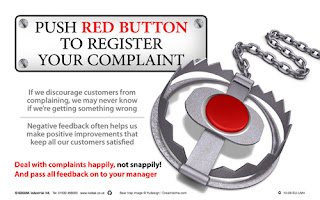
4. Not dealing with complaints properly
It takes time and energy for a customer to make a complaint so, if they feel something is worth complaining about, it's worth your time to acknowledge it and look into it.

Remember, the customer could have said nothing and simply decided not to deal with you again. If they complain they are giving you an opportunity to put things right.

Making an apology, offering a goodwill gesture, or using the complaint to make a positive change in your organisation might just be enough to keep the customer.

5. Focusing on what you can't do
If a customer won't listen to reason, or is asking for the impossible, repeatedly telling them what you can't do will only cause frustration for you both.

Be solutions-driven and offer feasible alternatives or compromises that you can reasonably deliver.

6. Changing the quality of your product/service
Customers rely on consistent quality, convenience and reliability. It is not always wise, therefore, to make changes that put your own needs before those of your customers. For example using cheaper raw materials to produce your product, shortening your opening hours or changing your equipment.
Remember, some customers would be more amenable to an increase in price than a reduction in quality.

7. Taking customers for granted
It costs around six times as much to gain a new customer than to keep an existing one – however demanding they might be.

Be good to your existing customers – do what you can to reward their loyalty and don't reserve all your best offers for new customers.

8. Not answering the phone
It sounds ridiculous to say it but many companies are still losing business by not answering the phone promptly enough or, in some cases, not answering it at all. Around 30% of first time callers will never call back if their call is not answered.

Make sure your staff are trained to answer the phone within five rings, take messages if the person required is unavailable and be helpful and polite to people who come through to the wrong number.

9. Making excuses
How many times have you heard these lines?

"It's not our policy."
"I'm new."
"We're short-staffed."
"You've come through to the wrong department."
"I was on holiday."
"My computer is down."

These are some of the most commonly used excuses people hear during telephone conversations with companies every day – and they're just not helpful.

Be solutions-driven. If it's not your policy, offer an alternative. If a call has come through to the wrong department, put it through to the right one. Offer to call the customer back if you need to refer their matter to someone else or if your computer is down.

10. Not offering a competitive service
Just because you are selling a great product or offering a great service doesn't make you immune from competition.

For example, if one of your competitors starts trading online, offering a price promise or giving an introductory discount these things could give them a competitive edge.

Be aware of what your competitors are offering – make an effort to stay ahead and make sure you don't lose out.

Kodiak's workplace posters regularly covers customer service and could help you to avoid some of these common mistakes.

If you would like to find out more about how our posters can help you offer better customer service, please get in touch.


For daily tips on dealing with common workplace issues, why not follow us on Twitter.
If you would like to find out how Kodiak posters 
can help your business work smoother, smarter 
and safer, please call us on: 01530 456 000 
or email us.


Tuesday, 29 March 2011

Industrial quality: Five things to remember


Industrial quality posters
1
Industrial quality posters
2
Industrial quality posters
3


Quality is a vital element in every type of business, but when there is a product involved it is especially important. The quality of your product can make or break your business – especially when the Internet makes it so easy for customers to find alternative suppliers.

So here are five things to remember to make sure quality stays at the top of your list of priorities.

1. It is everyone's job
That's right. From the directors and managers, who oversee the whole operation, to the cleaners whose sterling efforts keep dirt, pests and other undesirables from contaminating the products. It is important for everyone to understand and be familiar with your quality standards. Employees should know exactly what is expected of them and implement it to the best of their ability.

2. You can't add it later
Which is why quality must be at the forefront of everything you do and why it should never be sacrificed in favour of productivity. Remember, your customer doesn't care how many products you make today – only that the ones you send to them are perfect. Send out poor quality products and you risk losing revenue and customers.

3. Think inside the box
Damaged goods can cause huge disappointment, so make sure goods are packed securely enough to survive the journey to your customer.

4. A quality product is nothing without a service to match
Providing a good service means being flexible enough to meet the needs of your customers. It means attention to detail when packing and delivering orders. It means having the courtesy to let a customer know if there has been a problem, if you can't supply the goods they have ordered, or if there will be a delay. 

Good service also means responding well to customer complaints. Even if you have a quality product, things can still go wrong. Ensure any issues are resolved quickly, courteously and sympathetically.

5. The customer is your final quality checker
Quality control only ensures that your products meet your standards. Customer satisfaction is the real test of product quality. Satisfied customers are more likely to stay loyal, choose your products over your competitors' and recommend your products to others.


Kodiak's motivational poster programme regularly addresses all aspects of industrial quality.

Our database contains a wide range of posters covering the issues I have mentioned here and more.
Kodiak posters can help you improve quality in all areas of your business. If you would like to find out how, please contact us.

For daily tips on dealing with common workplace issues, why not follow us on Twitter
If you would like to find out how Kodiak posters 
can help your business work smoother, smarter 
and safer, please call us on: 01530 456 000 
or email us